How to Play Online Blackjack: Rules, Tips, and Best Strategies

If there’s one card game I genuinely respect at online casinos, it’s blackjack. Unlike roulette or standard slots where you pretty much hit a button and cross your fingers, twenty-one puts the outcome of every single round straight into your hands. When you bring proper mathematical strategy to the table, the theoretical house edge plunges to a measly 0.5%, giving you an RTP sitting right around 99.5%. Hands down, it’s the table game with the lowest casino advantage out there. The duel is strictly between you and the dealer, and I’m going to break down exactly what works so you stop bleeding chips for no reason.
The Goal and Core Concept: Beat the Dealer’s Hand
A lot of beginners fall into a classic trap: they think the whole point is hitting 21 no matter what. But here’s the reality: your only real objective is to finish the round with a higher score than the dealer, or simply sit back and let them bust (go over 21), provided you’re still alive in the hand.
Another key point: even if you’re at a live table packed with other players, you aren’t playing against them. Every seat is in an isolated, one-on-one showdown against the house. If the player next to you makes an unhinged play and busts, your hand still rides solely against whatever the dealer flips over.
Card Values and Hand Types (Soft vs. Hard)
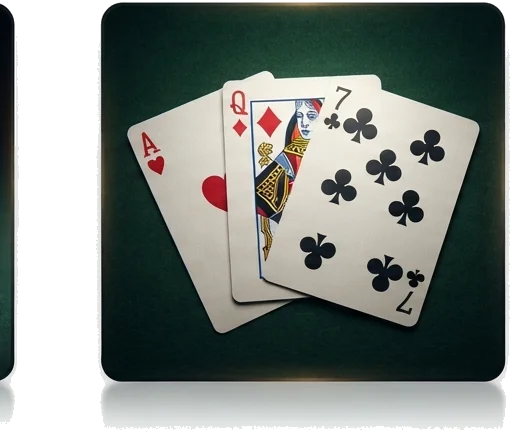
Before you put a single penny on the felt, you need to glance at your cards and tally your total on pure autopilot. Scoring in blackjack is dead simple:
- Cards 2 through 10: worth their exact pip value.
- Jacks (J), Queens (Q), and Kings (K): count as 10 each.
- Aces (A): count as either 1 or 11, depending on which value helps your hand more right then.
Getting how the Ace works is crucial because it unlocks an essential distinction: hard hands versus soft hands. Here’s the deal: a soft hand contains an Ace counted as 11. For instance, if you’re dealt an Ace and a 6, you’re holding a soft 17. The massive upside here is that if you hit and catch an 8, you don’t bust—the Ace automatically defaults to 1, turning your hand into a hard 15.
A hard hand, on the other hand, is any total without an Ace, or one where the Ace has to count as 1 to keep you in the game. A 10 and a 7 make a hard 17. Take another hit here and catch anything higher than a 4, and you’re instantly cooked.
Step-by-Step: How an Online Blackjack Hand Unfolds

Whether you’re grinding an RNG video table or playing with a live dealer, each round runs on a very specific, strict sequence:
- Placing bets: you pick your chip denomination within table limits and drop it onto the betting circle.
- The deal: the dealer deals two face-up cards to you. In traditional shoe games, the house gets one card face up and one face down (the “hole card”).
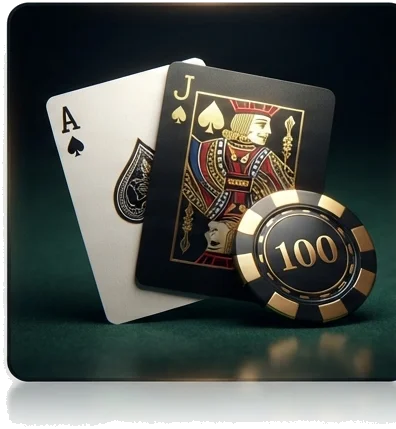
- Immediate checks: if your first two cards are an Ace and any 10-value card (10, J, Q, K), you hit a Natural Blackjack. The round ends right there and traditionally pays 3:2, unless the dealer is also sitting on blackjack.
- Player moves: if no natural blackjack drops, the spotlight turns to you. You can hit, stand, double down, or split.
- Dealer’s turn: once every player finishes their action, the dealer reveals the hole card.
A golden rule that a lot of green players miss: the dealer has zero free will. They play strictly by fixed house rules. The dealer must hit on 16 or lower, and must stand on 17 or higher. That rigid mathematical obligation is the exact reason we can predict outcomes and make optimal calls on every single spot.
Player Decisions at the Table: The Complete Action Guide
When the action gets to you, the buttons light up on screen. Knowing which one to hit without blinking is what separates reckless punters from players who actually exploit expected value.
Hit vs. Stand
Taking a hit means grabbing another card to boost your total, running the risk of busting if you creep past 21. Standing freezes your hand where it is and kicks the action back to the dealer. The baseline rule to burn into your memory is straightforward: on a hard 17 or higher, always stand—the odds of busting on a hit are through the roof. Conversely, on 8 or below, hit every single time without a second thought.
Double Down
Doubling down lets you drop a second bet matching your initial stake, with one catch: you get strictly one more card and your turn is automatically done. The sweet spot for this move is sitting on a hard 10 or 11 while the dealer is showing a vulnerable upcard (between 2 and 9). It’s the ultimate way to pump maximum value into the pot when the odds are tilted heavily in your favor.
Splitting Pairs
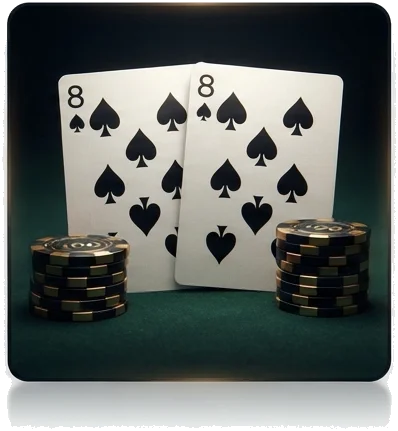
If your starting hand consists of two matching cards (like a pair of 8s or a pair of 5s), you can split them. You post an extra bet matching your first, splitting the pair into two completely separate hands. Always stick to these core mathematical commandments:
- Always split Aces and 8s: two 8s give you 16 (the absolute worst starting hand in the game), but splitting gives you two decent shots starting from an 8.
- Never split 10s: a pair of 10s gives you a rock-solid 20, which is strong enough to win the vast majority of showdowns.
- Never split 5s: a pair of 5s is a hard 10, an ideal launching pad for a double down, not for playing two weak hands starting with a 5.
Surrender and Insurance: Are They Worth It?
Some tables offer late surrender. It lets you bin your hand before taking any action and get 50% of your initial wager back. This is huge in hopeless spots—like holding a hard 16 against a dealer showing a 9, 10, or Ace. Better to salvage half your stake than dump it all into a statistically doomed spot.
Insurance, on the flip side, is a side bet triggered whenever the dealer shows an Ace. The casino asks for half your starting wager and pays 2:1 if the dealer turns over a blackjack. Sounds tempting, right? Don’t fall for it: insurance drags the overall RTP down to somewhere between 92% and 95%. Mathematically speaking, the house owns a massive long-term edge on this side wager. My practical advice: stay away from insurance, no exceptions.
Blackjack Basic Strategy: Fundamental Mathematical Rules
The legendary Basic Strategy isn’t gut instinct or snake oil; it was built through computer simulations running millions of hands to pinpoint the statistically flawless move for every conceivable matchup between your hand and the dealer’s upcard.
| Your Hand | Dealer’s Upcard | Recommended Action |
|---|---|---|
| Hard 12 to 16 | 4, 5, or 6 | Stand |
| Hard 12 to 16 | 7 through Ace | Hit |
| Hard 17 or higher | Any card | Stand |
| Soft 17 or lower | Any card | Never stand (Hit or Double) |
| Hard 10 or 11 | 2 through 9 | Double Down |
See why you should stand on hard hands from 12 to 16 when the dealer is showing a 4, 5, or 6? It’s simple: those are the dealer’s weakest cards. The house busts from those positions roughly 28% to 42% of the time. You don’t need to chase a pretty total; just stand back and let the dealer walk off the cliff. And remember: never stand on a soft 17, since you can improve your score with zero risk of busting on the next card.
If you like factoring in casino bonuses and wagering requirements to protect your bankroll, check out our blackjack bonus calculator to size up promo offers before jumping in.
Table Rules That Hit Your Wallet: Why You Must Dodge 6:5 Payouts
Not every online blackjack table uses identical rules, and you have to keep your eyes peeled so you don’t get milked. The nastiest modern trap is tables that pay 6:5 on a Natural Blackjack instead of the classic 3:2.
Wondering what that actually does to your stack? Say you drop a $20 bet and pull a natural blackjack. On a standard 3:2 table, you collect a clean $30 profit. On a 6:5 table, that exact same hand only nets you $24. That sneaky tweak tacks on roughly 1.4% straight to the house edge, wiping out any advantage you get from basic strategy. Also, hunt down tables where the dealer must stand on all 17s (S17 rule) instead of hitting on soft 17 (H17 rule)—S17 tables give players slightly better odds.
RNG vs. Live Dealer Blackjack: Picking the Right Format
Online, you’ll run into two primary ways to play: software-driven RNG (Random Number Generator) titles and live casino streams running real tables in real time.
RNG tables move at your pace: there’s zero time pressure to make a decision, minimum stakes drop down to micro-limits, and you can practice in free demo mode without risking real cash. Live dealer tables, meanwhile, deliver an authentic, interactive vibe with real croupiers and chat features, but they come with higher table minimums and a strict shot clock on your decisions.
One big myth I hear all the time: physical card counting does not work on online RNG software or live dealer streams. With digital RNG games, the shoe is mathematically reshuffled every single round. In live games, studios use Continuous Shuffling Machines (CSMs) or burn through deep shoe cuts, killing any chance of getting a reliable running count.
Practical Tips and Bankroll Management for Online Blackjack
Even with perfect strategy, blackjack brings short-term variance. To keep your head cool and stay profitable over time, always lean on these guidelines:
- Set a hard stop-loss and a realistic profit target before pulling up a seat. When you hit either, walk away.
- Ditch aggressive progressive betting systems like the Martingale (doubling your bet after losses)—a bad cold streak will smack into table limits or wipe out your stack before you know it.
- Keep a bankroll of at least 40 to 50 times your baseline betting unit to ride out the inevitable swings of the shoe.
- Drill the basic strategy chart in free demo mode before putting real cash on the line.
- Use our casino calculators to understand mathematical odds and the house edge across different bet scenarios.
Above all, keep in mind: online gaming is pure entertainment strictly for adults aged 18 and older, following responsible gambling standards. Play with discipline, and never gamble with money you need for daily life.
Online Blackjack FAQ
What’s the difference between Blackjack and 21?
At their core, there’s no difference. In many places, the game has simply always been called twenty-one. At casinos, both terms refer to the exact same game where you aim to beat the dealer without going over 21.
What is a 3:2 payout in blackjack and why is it better than 6:5?
A 3:2 payout awards $1.50 in profit for every $1.00 staked when hitting a natural blackjack (for example, a $10 bet pays $15 profit). A watered-down 6:5 table pays only $12 on that same bet, handing the house an extra 1.4% edge against you.
Can you count cards in online blackjack?
No. On RNG software tables, the cards are reshuffled by algorithms on every deal. On live dealer tables, studios rely on Continuous Shuffling Machines (CSMs) or cut the shoe in half, making traditional card counting completely ineffective.
What does having a soft hand mean?
A soft hand is any holding with an Ace valued at 11 points. The edge here is you can’t bust on your next hit, since the Ace can drop to a value of 1 if your hand total passes 21.
Is taking the Insurance bet worth it in blackjack?
It’s definitely not. Even though it pays 2:1 when the dealer turns over a blackjack, the real probability of the downcard being a 10 doesn’t justify the price tag in the long run, tanking the theoretical RTP down to a lousy 92% to 95%.
Latest articles
Other interessante
- Sports Betting at Play Fortuna: A Complete and Honest Guide
- Online Casino Game Providers: Meet the Giants Behind Your Favorite Slots
- Casino Calculators
- Free Spins in Slots: What They Are, How They Work, and Where to Find Them
- Slot Bonus Features: Wilds, Scatters, Multipliers, and More
- Beyond Aviator: Other Popular Crash games that you should try out
- RTP and Volatility in Slots: Understand How They Work and Choose the Right Game
- What Are Crash Games (The Aviator Game) and How Do They Work?